
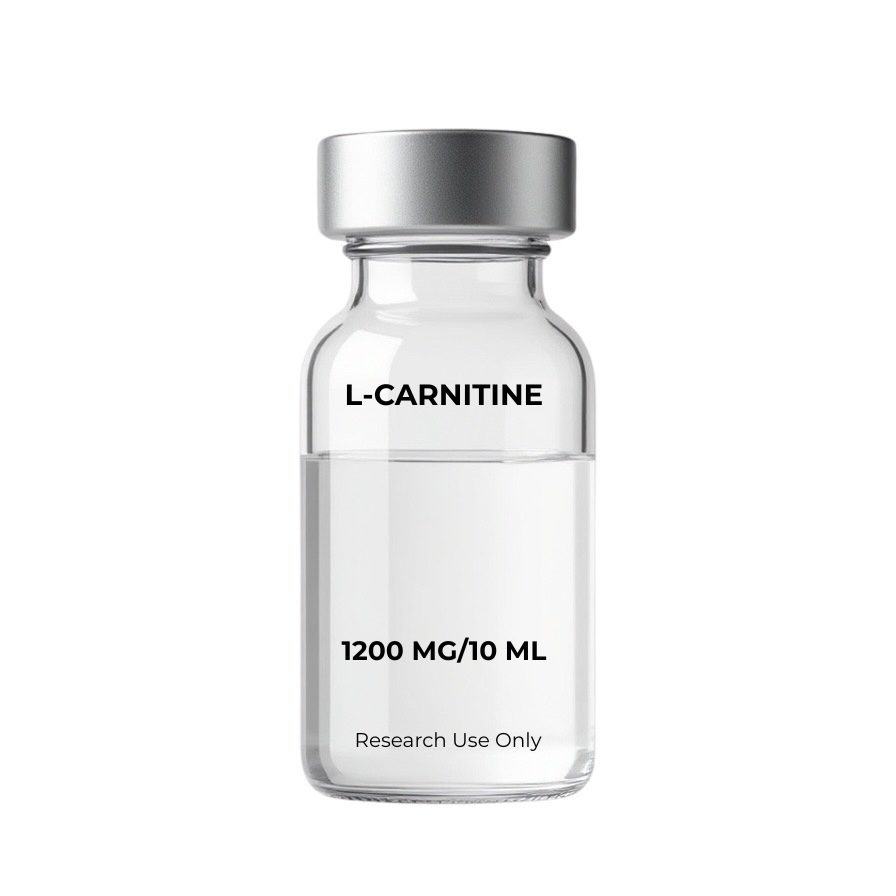
What is L-Carnitine LC1200?
L-Carnitine (CAS 541-15-1, β-hydroxy-γ-trimethylaminobutyric acid) is a naturally occurring quaternary ammonium compound synthesised from lysine and methionine. Molecular formula C₇H₁₅NO₃, MW 161.20 g/mol. L-Carnitine is the obligate carrier for long-chain fatty acids across the inner mitochondrial membrane via the carnitine/acylcarnitine translocase system — enabling mitochondrial β-oxidation. At research concentrations, it modulates acetyl-CoA/CoA ratios, influences glucose oxidation, and participates in peroxisomal fatty acid oxidation. QSC LC1200 provides 1200mg/mL — a concentrated format for cell culture, in vitro lipid metabolism, and mitochondrial function assays.
Research Applications
Mitochondrial β-Oxidation
Carnitine palmitoyltransferase I/II (CPT-I/II) activity, acylcarnitine shuttle, fatty acid flux
Energy Metabolism
Acetyl-CoA/CoA ratio modulation, glucose vs. lipid substrate switching, ketone body production
Cellular Lipid Profiling
Acylcarnitine species profiling by mass spectrometry, free carnitine pools
Mitochondrial Function
Membrane potential (ΔΨm) studies, respiratory chain coupling, oxygen consumption rates
Peroxisomal Oxidation
Very-long-chain fatty acid (VLCFA) processing, peroxisomal carnitine acetyltransferase research
Quick Specs
| Form | C₇H₁₅NO₃ |
| Purity | ≥99% by HPLC — every batch |
| CAS Number | 541-15-1 |
| Molecular Weight | 161.20 g/mol |
| Specification | ≥99% by HPLC — every batch |
| Shelf Life | 24 months unopened |
| Storage | 2–8°C | protect from light |
| Manufacture | In-house synthesis — Qingdao, China |
| Brand | Asia |